Beyond the Casino Floor: How Guest Expectations Are Reshaping Tribal Gaming Design
Walk through a casino resort today and one thing becomes immediately clear: guests expect far more than gaming.
Across tribal gaming, properties are evolving into fully integrated hospitality destinations. Gaming floors remain central to the experience, but they now exist alongside restaurants, spas, entertainment venues, social spaces, luxury accommodations, wellness amenities, and increasingly personalized guest experiences.
This shift raises an important question for owners, designers, and industry partners:
What will the most successful properties of the future understand that others miss?
Recently, I sat down with Katie Sander Smith, NCIDQ, CID, Associate at Cuningham, to discuss the trends shaping hospitality and gaming environments. Our conversation touched on everything from wellness and AI to sustainability and cultural storytelling. While the topics varied, several themes emerged repeatedly.
Guests Choose Experiences, Not Amenities
Today's guests are not simply comparing gaming options. They are comparing experiences.
As Katie explained, operators are asking a different question than they were even a few years ago. The focus is no longer solely on creating new gamblers. Increasingly, the challenge is understanding why a guest would choose one destination over another.
That shift is influencing everything from programming to design.
Luxury bowling lounges, elevated food and beverage concepts, spas, social gaming venues, and live entertainment are becoming increasingly important pieces of the hospitality ecosystem. These amenities are not necessarily new, but the expectation surrounding them has changed.
Guests remember how a property made them feel.
The most successful resorts are intentionally layering experiences by creating places to gather, celebrate, retreat, and reconnect. The goal is not simply to fill square footage. It is to curate memorable moments.
Younger Guests Want Connection
For years, the industry has discussed attracting younger demographics. According to Katie, the conversation is finally moving beyond theory.
Millennials and Gen Z expect environments that support interaction. They grew up social and digital, often simultaneously. Traditional rows of gaming machines alone no longer create the same level of engagement.
Instead, younger guests gravitate toward communal experiences.
Social gaming venues, shared entertainment environments, and hybrid physical-digital experiences are reshaping how spaces are planned. Designers are responding by creating more fluid environments that encourage interaction and flexibility.
This evolution extends well beyond architecture.
Furniture, finishes, and flooring selections increasingly need to support multiple uses throughout the life of a space. As footprints become denser and programming evolves, adaptability has become essential.
Wellness Has Entered the Casino
Historically, casino environments emphasized stimulation. Today, comfort and wellness are becoming equally important.
Wellness in hospitality extends beyond spas or fitness centers. It shows up in intuitive circulation, acoustics, lighting, materiality, and opportunities for respite within high-energy environments.
Guests want visual clarity. They want moments of pause. They want environments that feel comfortable both physically and emotionally.
Designers are responding through larger vestibules, increased access to natural light, bio-based materials, improved acoustics, and carefully layered transitions between energetic and restorative spaces.
High energy and wellness are no longer competing ideas.
The strongest properties will successfully balance both.
Flooring Is Becoming an Architectural Tool
One insight from my conversation with Katie particularly resonated with me.
Flooring is no longer viewed simply as a finish.
Increasingly, it is functioning as critical infrastructure within hospitality environments.
Through material transitions, pattern, texture, and acoustic performance, flooring helps establish distinct zones without relying on physical walls. Carpet can create intimacy within large public spaces, absorb sound, reinforce circulation patterns, and support the overall emotional tone of an environment.
The strategic use of soft and hard surfaces allows designers to intentionally shape how guests experience a property.
In many ways, flooring has become one of the quietest yet most powerful tools available to hospitality designers.
Technology Should Enhance Hospitality, Not Replace It
Artificial intelligence continues to influence nearly every aspect of hospitality.
From guest profiling and operational efficiencies to concept visualization and design exploration, the opportunities are significant.
AI can help teams work faster, identify patterns, and generate ideas more efficiently than ever before.
However, both Katie and I agreed on an important distinction.
Hospitality is fundamentally human.
Technology can support creativity, but it cannot replace intuition, empathy, or emotional intelligence. Designers still must understand how people move through a space, what makes them feel comfortable, and how sensory experiences shape memory.
The future of hospitality will belong to organizations that successfully combine technological innovation with deeply human experiences.
Cultural Storytelling Will Continue to Define Tribal Gaming
Perhaps the most exciting trend shaping tribal hospitality is the continued emphasis on authentic storytelling.
The most memorable environments do more than look beautiful. They communicate identity.
Throughout tribal gaming, designers are increasingly translating history, geography, cultural symbolism, and community narratives into physical environments. Every design decision, from lighting and artwork to furnishings and flooring, becomes an opportunity to reinforce a sense of place.
When guests experience a property rooted in authentic cultural expression, the result feels meaningful rather than thematic.
That authenticity cannot be manufactured.
It must be developed through collaboration, listening, and partnership.
Looking Ahead
Five to ten years from now, guests will likely expect personalization that feels seamless, technology that feels intuitive, and wellness that is fully integrated into the hospitality experience.
They will also expect environments that reflect the values of the communities they visit.
The most successful tribal gaming properties will understand that great hospitality extends beyond entertainment. It is built through intentional design, thoughtful partnerships, cultural authenticity, and experiences that leave guests feeling connected.
Ultimately, the future of tribal gaming will not be defined by a single amenity or technology.
It will be defined by how thoughtfully we bring all of these elements together.
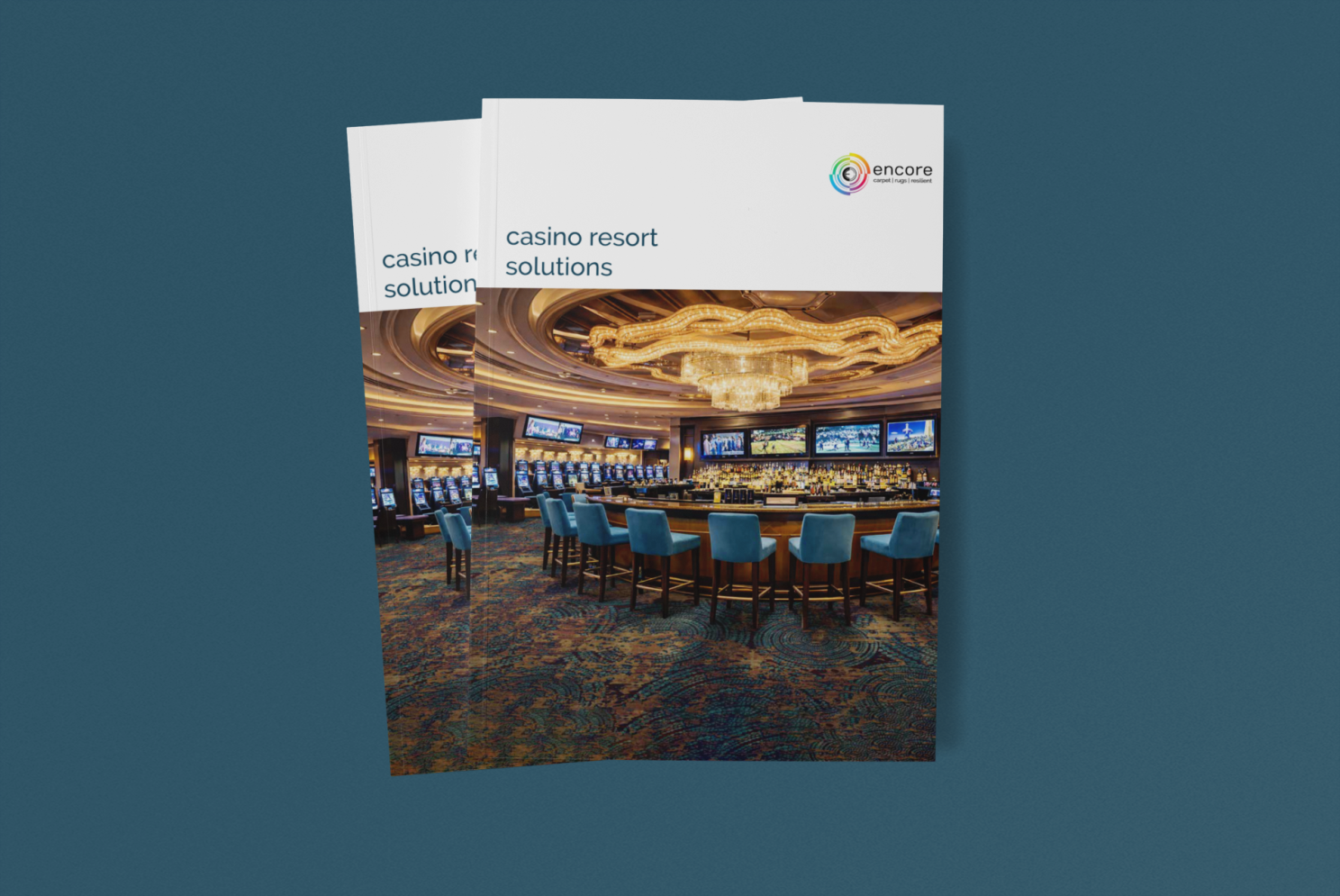
If you're planning a new project or renovation and would like to explore flooring solutions for the entire casino resort environment, contact me at alampo@encorehospitalitycarpet.com for a copy of our Casino Resort Solutions brochure.
Want to dive deeper into these ideas? Read my full conversation with Katie Sander Smith, where we explore AI, wellness, sustainability, guest expectations, and the future of tribal gaming design in greater detail.